
KRINAVI TRIP FIT
KRINAVI Trip Fit
75/100Seomyeon or Haeundae: Which Daily Rhythm Are You Willing to Hand Over to Your Hotel Area?。
- Time efficiency70/100
- Route fit80/100
- Planning flexibility70/100
- Weather resilience70/100
- Crowd control70/100
- Value for cost75/100
Choose Seomyeon when city days end in different districts; choose Haeundae when the beach is part of the daily routine. One beach visit alone does not require a coastal hotel. See Seomyeon. See Haeundae.
Write down where each day ends
Map where each day ends. Seomyeon suits varied city evenings; Haeundae suits repeated coastal nights.
A coastal base pays off when you will walk, rest or eat by the water repeatedly, not only visit once.
Seomyeon suits plans that may change
Seomyeon does not make every district close. It helps when weather, delays or group plans change a multi-district trip.
From Seomyeon, give the east side a full day. Repeated midday crossings erase the transit advantage; if most days are west, compare Nampo-dong. See how Nampo-dong links a west-side day into the evening.
Choose Haeundae when the beach is part of the day
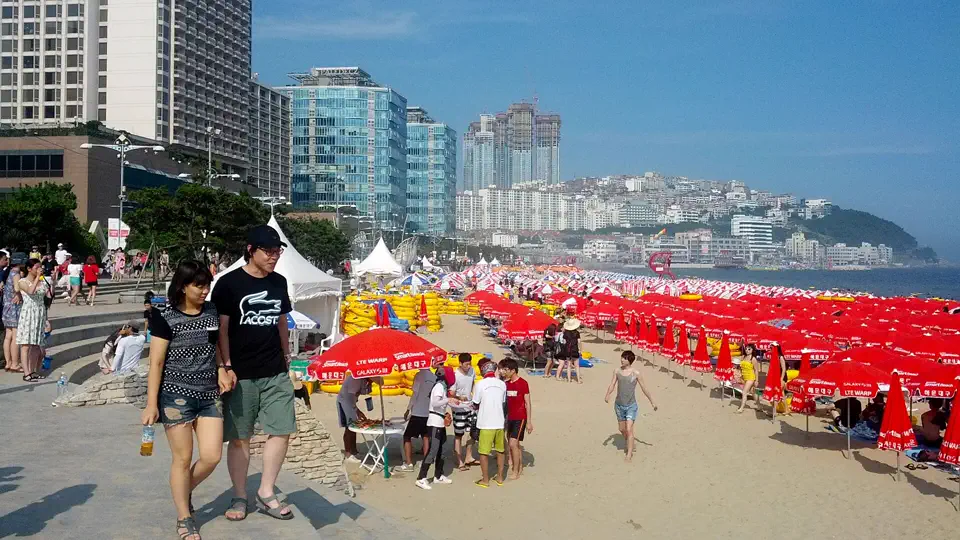
Haeundae fits a trip that uses the beach before breakfast, between outings or after dinner. Repeated coastal time can justify the base.
If most plans are downtown and the beach is one stop, stay in Seomyeon and make the coast a full-day outing.
Match the district to how the group spends evenings
Seomyeon helps when friends split up across the city but regroup for dinner. Haeundae fits when the group’s shared time is by the water.
For children or older travellers, check the actual hotel walk, crossings, slopes, luggage access and nearby meals in either district. See Busan hotel comparison’s check-in condition list.
Include arrival, departure and the hotel move
Arrival and departure matter too. A late arrival with bags may favour the simpler check-in route; an east-coast departure may favour Haeundae.
Choose one base first. Add a hotel move only when at least two full east-side days justify the packing and re-check-in. See Busan’s hotel-switch recovery test. See how to arrange transition days in a five-day Seoul plan.
Don’t let the room rate pretend it has already made the choice for you
Fix dates, guest count, bed and cancellation terms before comparing similar hotels. Then decide whether beach access will be used often enough to support the difference.
A district label does not guarantee an easy hotel entrance. Check the exact exit, crossings, late return and room conditions. See whether Gwangan-ri is really suitable for staying the whole night.
If Seomyeon is your base, compare station side, late walk, luggage route and room capacity. See Seomyeon hotel recommendations’ three-return-home test.
For a longer beach stay, compare Haeundae with Gwangalli by when you use the coast; then shortlist hotels by room and station access. See Haeundae vs. Gwangan-ri. See Haeundae hotel recommendations.
Wait to choose until the daily routes are clear
If the route is unsettled, wait to choose the beach base until daily stops are clear. Choose Haeundae when consecutive east-side days are planned.
Choose the repeated route you want to shorten
Which repeated trip would you rather avoid: a late ride back from the beach, or a cross-city transfer when plans shift? Use that answer instead of a general convenience score.
If neither district fits, compare Nampo-dong and Gwangalli in the Busan base guide. Write each day’s first and last stop before planning transit. See Busan accommodation’s overall decision guide. See how to use a Korean transit card.
KriNavi decision card
Choose Haeundae for repeated beach time; choose Seomyeon for varied city days.
Count late returns and hotel moves before comparing nightly rates.