
KRINAVI TRIP FIT
KRINAVI Trip Fit
80/100Seokguram pairs Silla granite construction and Buddhist sculpture with a mountain transfer. Count the approach and return as part of the visit.
- Time efficiency75/100
- Route fit85/100
- Planning flexibility85/100
- Weather resilience75/100
- Crowd control75/100
- Value for cost90/100
Confirm Bus 12 or parking, weather and access notices for your date; then allow time for the walk beyond the car park and the return.
Seokguram Grotto is a compact viewing visit on Mount Tohamsan, but the mountain transfer and walk take more planning than the time inside. It suits travellers interested in Silla stonework and Buddhist sculpture who are comfortable viewing the principal Buddha through protective glass. Plan transport, weather and the return before adding it beside Bulguksa.
An artificial granite grotto on Mount Tohamsan
Traditional accounts connect construction with Kim Dae-seong in 751 under King Gyeongdeok, with completion in 774; the site was then called Seokbulsa. UNESCO inscribed Seokguram and Bulguksa together in 1995. Seokguram is a built structure, not a natural cave: an antechamber and corridor lead into a circular rotunda assembled with more than 360 granite slabs.
The Sakyamuni Buddha sits at the centre, with surrounding Buddhist figures carved in relief. Look at the relationship between the Buddha, the dome and the figures around the room; the viewing position does not let visitors walk around the sculpture.
The glass barrier protects the interior
UNESCO describes moisture, condensation, mould and weathering as conservation concerns. Early twentieth-century reconstruction and later climate-control work changed how the grotto is protected; the visitor view is now separated by glass to limit exposure to changes in temperature and humidity. Expect a fixed angle, possible reflections and other visitors sharing the sightline. Follow current photography and circulation rules and do not press equipment against the barrier.
Entry, hours and parking
The Korea Tourism Organization’s Seokguram listing currently gives free admission, opening hours of 09:00–18:00 and viewing until 19:00. Its separate Gyeongju National Park listing gives 09:00–17:00 for the grotto, so confirm the day’s closing time with Seokguram at +82-54-746-9933 before travelling. The current visitor listing gives parking at KRW 1,000 for cars under 1,000 cc, KRW 2,000 for larger cars and KRW 4,000 for buses.
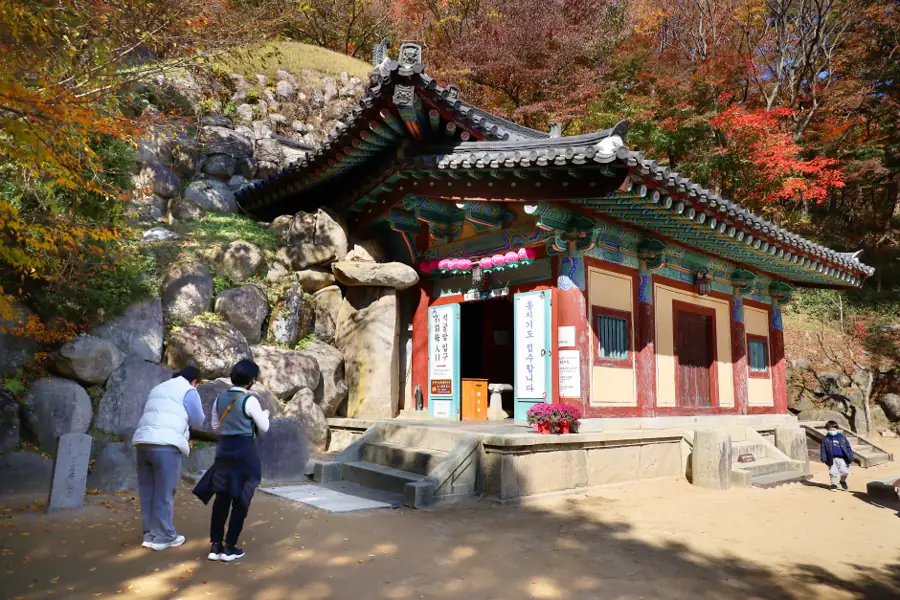
Choose bus, car or trail before reaching Bulguksa
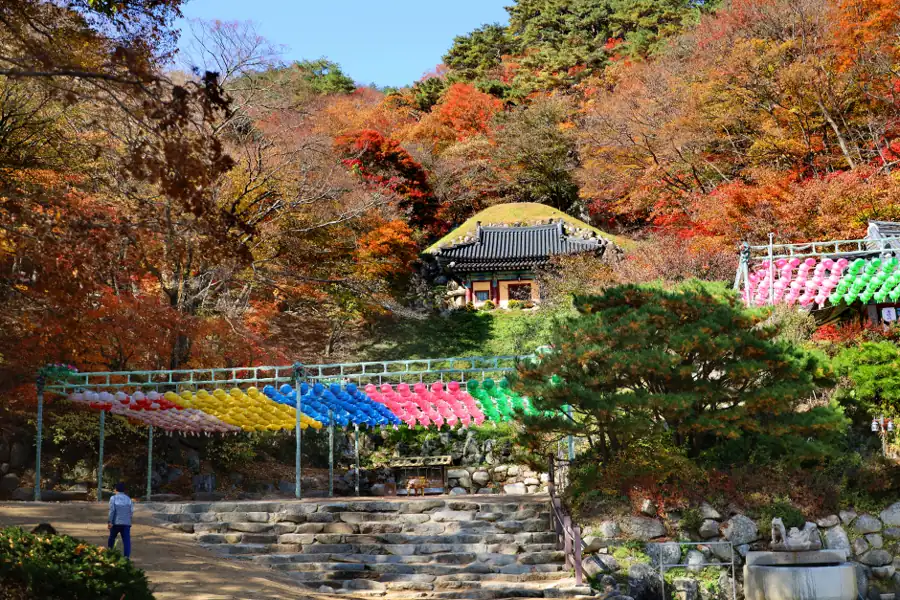
Gyeongju City’s route map lists buses 10 or 11 from the intercity terminal, or 700 from the express terminal, to Bulguksa, then Bus 12 to Seokguram. The Korea Tourism Organization describes the Bulguksa shuttle as a 20-minute ride departing hourly. Confirm current departure and last-return times before setting out; mountain service can determine whether this visit fits your day.
By car, the site estimates about 20 minutes from Bulguksa to the mountain car park, followed by about a 10-minute walk to the precinct. Hairpins, traffic, fog and road conditions can add time. The hiking trail between Bulguksa and Seokguram is about 3 kilometres; the driving route is about 9 kilometres. The trail has elevation and changing surface conditions, so it is a hike rather than a shortcut for city shoes, luggage or painful knees.
Budget time for the transfer, queue and walk
The viewing room is small, but the full visit includes the mountain route, the walk beyond the car park and the return. The guide’s rough planning range is about 60 minutes for the car-park approach, viewing and return walk; around 90 minutes to two hours from Bulguksa when Bus 12 connects; and 2.5–3 hours or more if a bus is missed, crowds slow the visit or you hike. These are planning estimates, not official visit durations.
On a short Gyeongju day, choose between the mountain sites and the central historic area rather than making every attraction mandatory. If you want Bulguksa and Seokguram together, place them in one block and protect the transport back to the city.
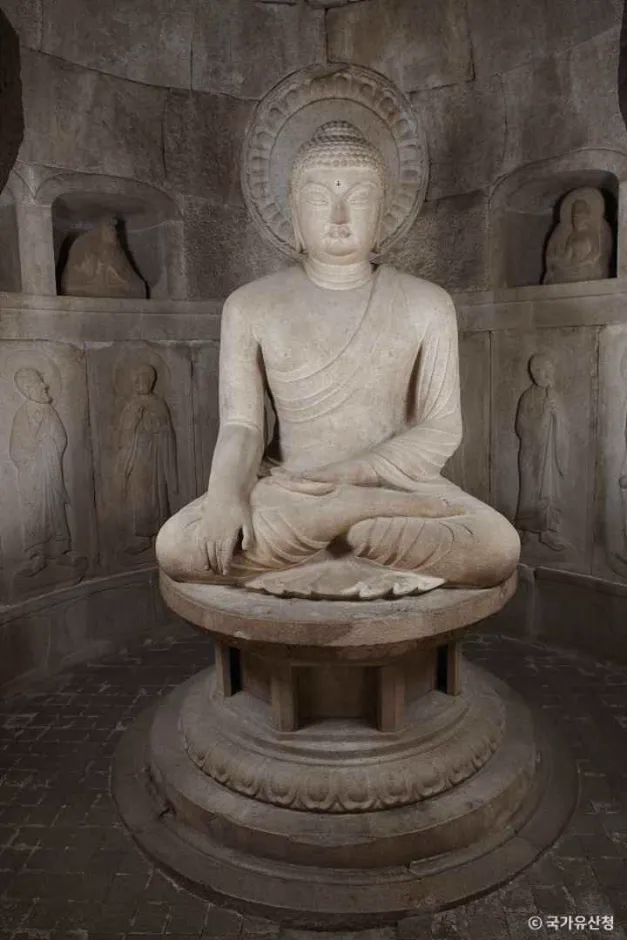
What to look for through the glass
The Buddha sits on a lotus pedestal with the right hand in the earth-touching gesture and the left hand in the concentration gesture. The halo aligns behind the head, while guardian figures, bodhisattvas and disciples lead the eye toward the centre. Some details may be hard to see when the room is busy; take in the composition instead of waiting indefinitely for a perfect close view.
Weather and access affect the mountain journey
Fog reduces road visibility; heavy rain can make the path and steps slippery; snow or ice may affect buses, driving and the trail. Autumn foliage can add traffic and queues. Check the mountain forecast, official notices and route conditions as well as Gyeongju’s city weather. Do not make the ascent if transport is suspended or conditions are unsafe.
The approach from parking includes an incline, some steps and a walk of roughly ten minutes. If a wheelchair, stroller or painful knees are involved, confirm access arrangements and assistance directly with the site rather than assuming the car park reaches the grotto entrance. The cited visitor page says pets are not admitted; ask the site about assistance-animal arrangements.
Fit it into the rest of the trip
From Busan, account for the intercity trip before adding the mountain transfer. From Seoul, a same-day return leaves less time for the central sites; consider an overnight if Daereungwon, Cheomseongdae and Donggung & Wolji are also priorities. For either origin, decide the return connection first and treat a taxi or tour as a way to reduce transfer waiting, not as a shorter view inside the grotto.
- Check current last entry, notices and weather.
- Choose Bus 12, a car or the trail, then confirm the return plan.
- Allow time for the walk after parking and any queue.
- Check parking signs and the actual fee classification.
- Accept the protected fixed view before making the mountain trip.
- Leave a buffer for the return to central Gyeongju.
Seokguram is a strong choice when its granite construction and sculpture interest you and the mountain logistics fit your day. If you mainly want exterior photographs, have little daylight left or face unsafe conditions, keep the central route and visit another time.
More Gyeongju planning
- one-day Gyeongju itinerary
- Gyeongju day trip versus overnight
- Bulguksa admission and transport
- car-free Gyeongju plan
- evening in Gyeongju
- one-night Gyeongju itinerary
- Busan to Gyeongju transport
- Seoul to Gyeongju by KTX or bus
- Where to stay in Gyeongju
- How to choose a Gyeongju hotel
- Two nights in Gyeongju
- Seoul, Busan and Gyeongju in seven days
- Seokguram | Hours and fees
- Seokguram | Access
- | Seokguram Grotto
- UNESCO | Seokguram and Bulguksa
- Gyeongju travel planning
- How to choose a Korea eSIM
- How many days for a first Korea trip?
The visitor-page details above were recorded on 23 August 2026. Seokguram’s hours and fees page, access page, Korea Tourism Organization entry and UNESCO World Heritage record are linked above; recheck live operating details before travel.