
KRINAVI TRIP FIT
KRINAVI Trip Fit
75/100For the travel scenario described here, KRINAVI Trip Fit is 75/100. Seonyudo is valuable not as another lawn beside the Han River but as a former water-treatment plant whose basins, pipes and concrete structures became an ecological park. It merits a cross-city trip mainly for industrial reuse, a quiet walk or a route already in western Seoul.
- Time efficiency55/100
- Route fit70/100
- Planning flexibility85/100
- Weather resilience75/100
- Crowd control75/100
- Value for cost90/100
Seonyudo Park is most compelling as a former water-treatment plant turned into an ecological park. Give the island 60–90 minutes if you want to see the old basins, gardens and Han River edge; from elsewhere in Seoul, add the station walk and bridge approach.
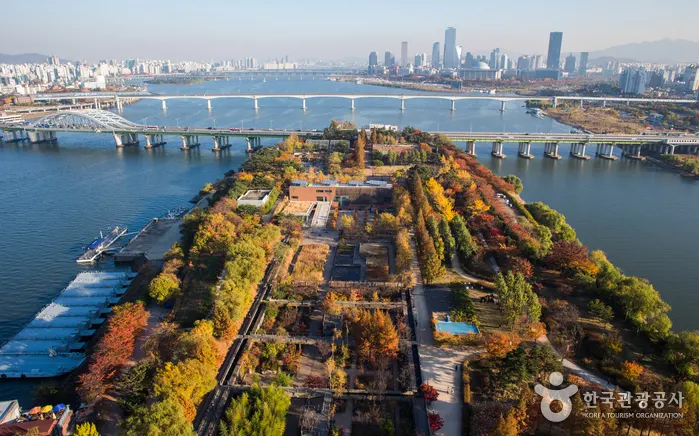
Read the waterworks before the gardens
The site stopped operating as a water-treatment plant in 2000. Its tanks, concrete columns and water channels remain part of the landscape, alongside the Garden of Time, Green Column Garden and aquatic-plant areas. That reuse is the reason to make the trip. Seoul’s account of Seonyudo Park describes the industrial structures and planting; Visit Seoul’s park listing gives the current visitor information and lists the address as 343 Seonyu-ro, Yeongdeungpo-gu.
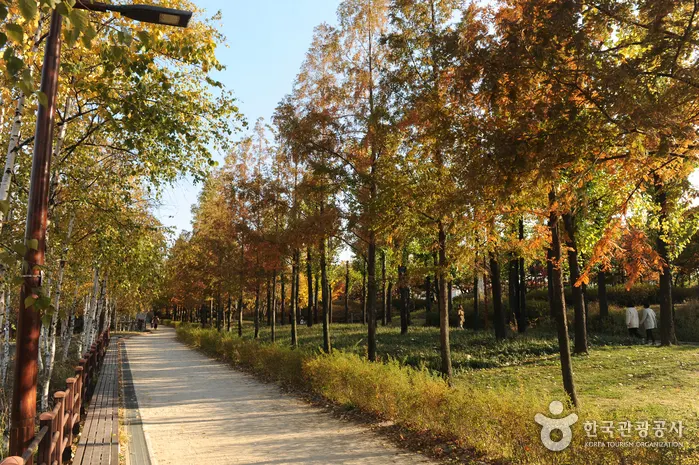
Separate park time from exhibition time
The park is listed as open daily from 06:00 to midnight, with free admission. The exhibition hall has a shorter schedule: 09:00–18:00, closing at 17:00 in winter, and closed Mondays. If the hall matters, arrive before its closing window; an open park does not mean every indoor space is open.
For a compact visit, allow 30–45 minutes for a main structure and the return to the entrance. The 60–90 minute loop adds the waterworks, garden spaces and a river viewpoint. Two hours makes sense only with slow photography, a confirmed exhibition or child rest breaks.
The station is close enough to walk, not at the gate
Line 9’s Seonyudo Station Exit 3 is about 782 metres from the park, approached by streets and a pedestrian bridge. Dangsan, served by Lines 2 and 9, is another option if it already fits the day, but the walk is longer. Check the exact entrance and return route on the official park map; do not plan the total outing as one hour just because the time inside is one hour.
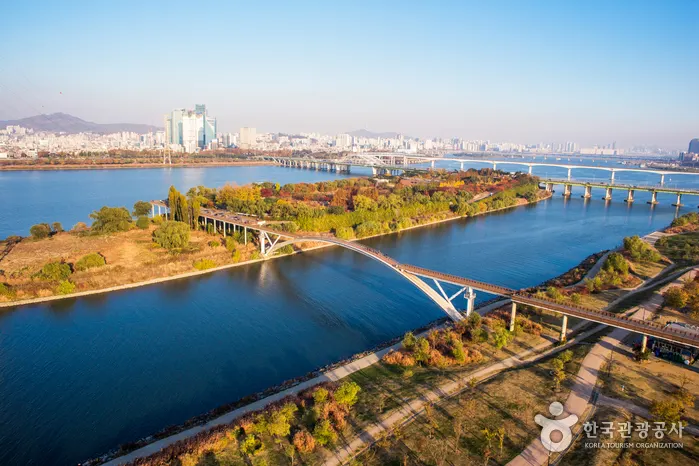
Keep the river section weather-dependent
Seonyugyo is part of the visit: it connects the riverbank to the island and makes the former utility site’s geography easier to understand. At sunset, the bridge and water give the park a different outline, but sunset is useful only if there is enough time to walk back and catch the planned train. Rain can make timber and stone paths slippery; summer heat and humidity shorten a comfortable outdoor stop.
Visit Seoul lists accessible paths, toilets and information services, including wheelchair rental. The bridge gradient, garden turns, temporary work and total distance still affect an individual route, so choose one or two core areas rather than promising to cover the whole island. The official map also controls on-site rules; check its current signs before bringing food or riding a shared bicycle.
Choose the park for the reuse story, not just a lawn
Seonyudo suits a west-Seoul afternoon, a quiet river walk or an interest in industrial reuse. Seoul Forest offers a larger park day with nearby food; Cheonggyecheon is easier to insert into a central itinerary; Oil Tank Culture Park is the stronger comparison for industrial structures. If the trip has only three or four days and the hotel sits across the city, keep the nearer park in the plan.