
KRINAVI TRIP FIT
KRINAVI Trip Fit
70/100Choose a summit, highland walk or short route by its endpoint, current access and the group’s pace.
- Time efficiency75/100
- Route fit75/100
- Planning flexibility60/100
- Weather resilience60/100
- Crowd control85/100
- Value for cost75/100
Start with the finish. Seongpanak and Gwaneumsa climb to Baengnokdam; Yeongsil and Eorimok lead to Witse Oreum; shorter trails make sense when a full summit day is out of reach.
Pick the route by its endpoint
A “Hallasan hike” can mean a near-full-day summit climb or a shorter highland walk. Choose the endpoint before arranging transport, food and the return.
Baengnokdam requires a long day
9.6 km each way; the official estimate is about 4 hours 30 minutes to the summit. Most of the approach runs through forest and the gradient is comparatively steady. The round trip is 19.2 km.
8.7 km each way; allow about 5 hours to the summit by the park estimate. The route has steeper climbs and larger elevation changes, with valley scenery through the upper section.
Only these two routes reach Baengnokdam. Their controlled summit sections use the reservation system; entry limits and availability can change by date.
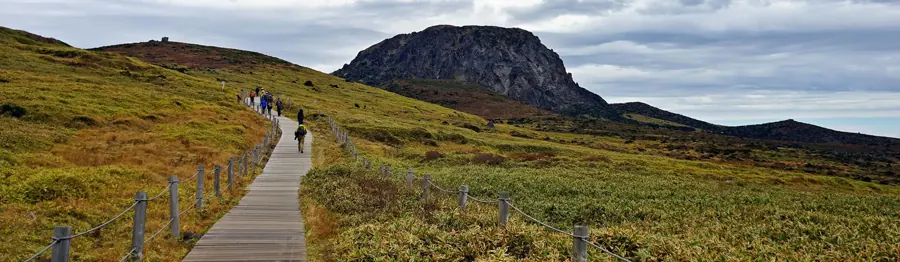
The walking estimates do not include breaks, queueing at checkpoints, weather delays or a slower descent. A one-way Seongpanak–Gwaneumsa traverse also ends at a different trailhead, so arrange the transfer before leaving.
For Witse Oreum, take a highland route
Yeongsil and Eorimok finish below Baengnokdam at the Witse Oreum area. They do not use the summit reservation section, but seasonal control points and weather closures still apply. The park lists Yeongsil as a 5.8 km course to the south-wall junction, with an estimated 2 hours 30 minutes one way; check the selected endpoint because the shorter Witse Oreum walk is not the full listed line.
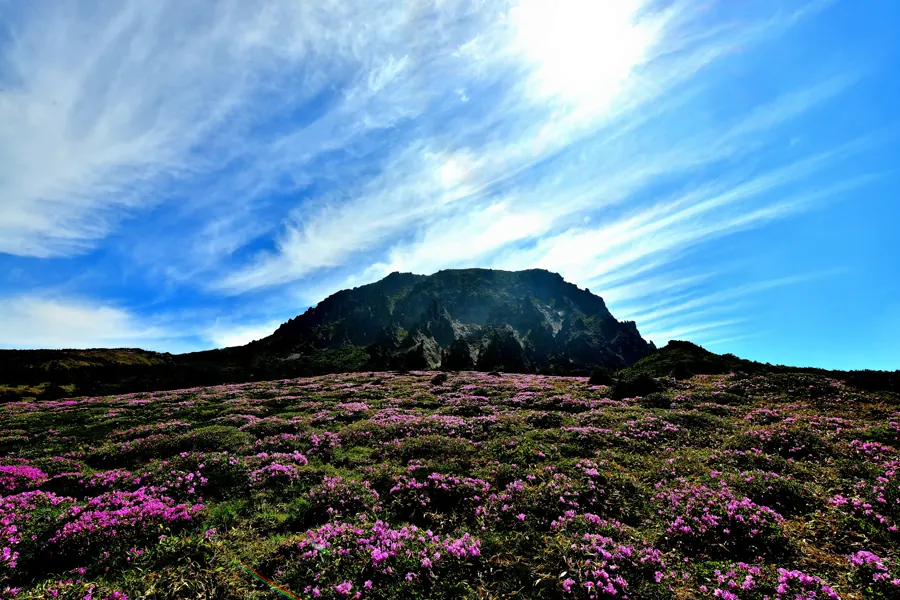
These routes suit a group that wants highland terrain without the full crater climb. The park recommends Yeongsil or Eorimok for visitors without recent hiking experience or with health concerns, with access up to roughly 1,700 m.
Shorter trails have their own cutoffs
Eoseungsaengak and Seokguram are shorter mountain outings, not substitutes for a summit with the same views. Donnaeko is a substantially longer southern approach. Check each trail’s entrance and intermediate cutoff rather than judging it by the word “short.”
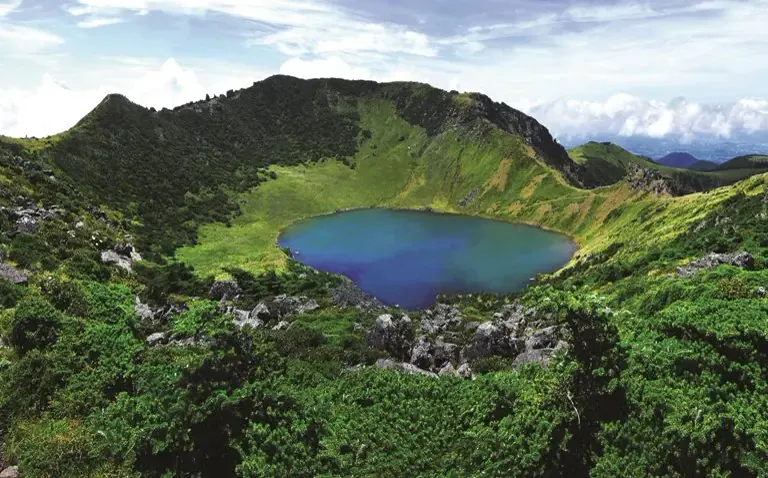
Check the reservation and entry rules for your date
The current park reservation notice covers the Baengnokdam sections between Azalea Field and the summit on Seongpanak, and between Samgakbong and the summit on Gwaneumsa. The notice lists Yeongsil, Eorimok, Donnaeko, Seokguram and Eoseungsaengak outside that summit reservation system. That does not exempt them from closures, weather restrictions or seasonal checkpoints.
For a reserved summit section, each hiker needs their own QR code and matching identification. Check live reservation status, trail notices and the mountain weather on the day; the seasonal cutoff table can change and older copies may disagree. Never plan around a past Gwaneumsa repair notice as though it described today’s access.
Carry what the trail does not provide
Seongpanak has no shop on the trail. Bring food, water, layers and weather protection before setting out; winter conditions may require traction, gloves and warm water. Follow the designated trail and pack out rubbish.
Before choosing a route, confirm the first ride to its entrance and the last workable return. A bus timetable, road condition or parking status can change; allow a fallback if the plan depends on a transfer.
Official trail information
- Hallasan National Park reservation status and notices
- Seongpanak trail distance and route information
- Gwaneumsa trail distance and route information
- Reservation, seasonal checkpoints and safety information
- Official notice on the reserved sections
- QR code and identification notice
Distances and walking times are the park’s estimates. Recheck live status, access and the date-specific reservation screen before travel.