
Seopjikoji is an exposed coast walk across grass and volcanic rock. Give it a separate time window instead of squeezing it between the Seongsan summit and a fixed ferry departure.
Give the cape its own walking window
Seongsan is an uphill attraction; Seopjikoji is a walk shaped by wind and changing coastal views. If doing both, leave time for food and the return. Travellers who want only one climb can visit Seongsan on another morning.
At the entrance, check wind, spray and footing before choosing the exposed edge. Wear shoes with grip and agree on a visible turnaround point so anyone can shorten the walk.
Save the return before the bus journey
Before starting, identify both the arrival and return transport. If buses are infrequent, include the wait in the day and set a safe turnaround time.
From Seongsan, the cape can fit a flexible half-day. From Jeju City, allow for the longer round trip and shorten another stop rather than treating it as a quick detour.
Shorten the route when wind or surf rises
Light wind and clear visibility may suit a longer walk. In moderate wind, keep to the entrance and main viewpoint; in strong wind or heavy rain, use a safe short view and leave the exposed edge.
Use the season to set your start time
In spring, bring a wind layer. Summer heat favours an early or late walk with an indoor break at midday. Recheck wind even on clear autumn days.
Winter wind increases the effort of the same route. Check shoes, outer layers and daylight; in rain, a short entrance view followed by a meal can be the whole visit.
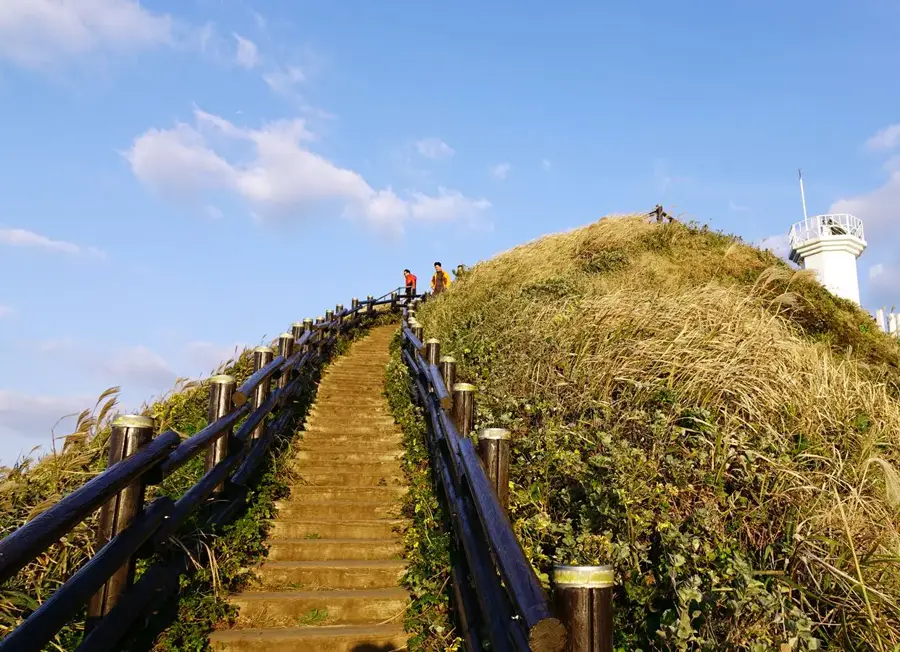
Choose a base for the return trip
A Seongsan-area base keeps changes local. Jeju City works better when this is one part of a larger east Jeju day. Compare the first departure, last return, luggage handling and nearby food.
Build a realistic east-coast half-day
- Check wind and footing at the entrance; set the farthest turnaround point.
- Walk to the main viewpoint before adding an exposed branch.
- Find the return bus stop or car before starting.
- If conditions worsen, move to food or the room and keep Seongsan separate.
Set the route length from the actual wind and transport. Check current access before leaving and confirm the return time.
Choose accommodation that makes the transfer and weather fallback workable.
Keep Seopjikoji flexible across two days
If the morning already included the Seongsan climb, keep the afternoon to the entrance and one viewpoint. On a separate day, decide whether wind and energy support the outer path.
From Seongsan, plan one main coastal stop and a nearby meal. From Jeju City, treat the transfer as part of the outing. If linking two coastal stops, confirm the facilities and next boarding point first.
Do not force Seopjikoji into the same sunrise window as Seongsan. Make one the morning anchor and keep the other for later or the next day. Extend a short entrance walk only when light and footing improve.
Set meeting points and footwear
Agree on a meeting point and time before the group spreads out. Use the entrance, main viewpoint or turnaround point to reunite without asking slower walkers to continue over exposed ground.
Wear a wind-resistant layer and secure loose items. Drink before the open section, and shorten the walk after rain when grass and rock may be slick.
Three route lengths for changing conditions
- Half-day: entrance, main viewpoint and a short protected section, then eat near Seongsan.
- Split mornings: make either Seongsan or Seopjikoji the anchor and move the other to another day.
- Wind-and-rain option: take the entrance view, eat nearby and switch to an indoor stop.
With two nights in the east, keep the walk flexible. Let weather and the group’s energy determine how far to go instead of treating the cape as a checklist.